

When Family Harm Hides Behind “Love”
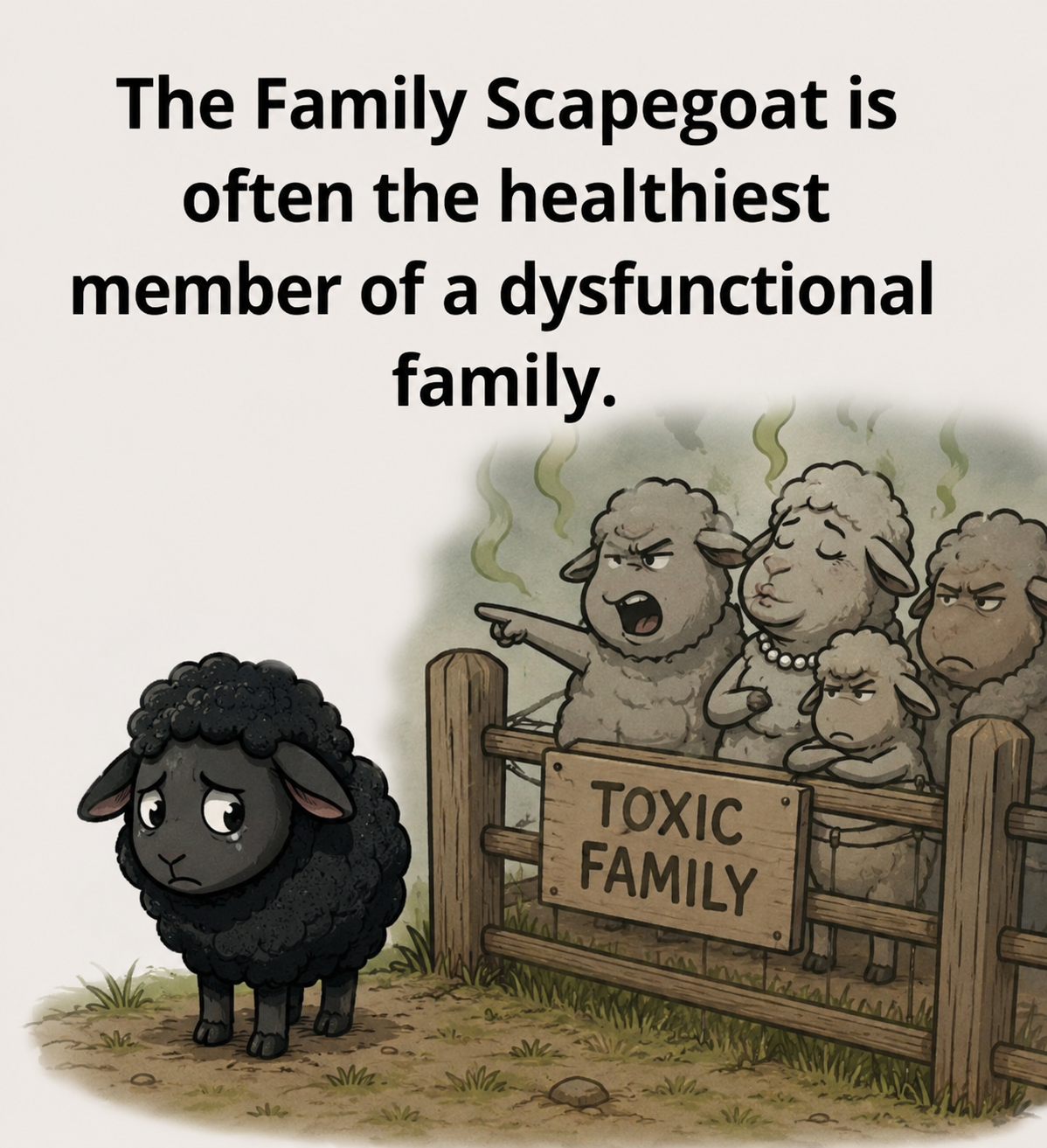
There’s a particular kind of grief that comes from finally understanding the truth after your children are already grown.
Not the grief of death.
Not the grief of divorce.
Not even the grief of betrayal alone.
It’s the grief of hindsight.
It’s realizing that behaviors you once excused as “difficult personalities,” “old-fashioned parenting,” “family drama,” or “that’s just how they are” were actually harming your children while it was happening — and you did not fully see it.
That realization can hollow a person out.
For years, I believed endurance was strength.
I believed keeping the family together mattered more than conflict.
I believed children benefited from grandparents simply because they were grandparents.
I was wrong.
And that truth is painful to write.
What I Mean by “Emotionally Harmful Behavior”
Before going further, I want to be clear about something.
This article is not about assigning clinical diagnoses to family members. It is about patterns of self-centered and emotionally harmful behavior that can exist inside families for generations without being recognized for what they are.
I’m referring to behaviors such as:
manipulation disguised as love,
chronic guilt-tripping,
disrespect for boundaries,
emotional control,
favoritism,
undermining parents,
emotional invalidation,
and making relationships revolve around power, attention, or obedience instead of emotional safety.
These high-control family dynamics often become normalized over time, especially when they are woven into family culture and tradition.
The Myth That Family Automatically Equals Safety
Many of us were raised to believe family loyalty is sacred no matter the cost.
We were taught:
Respect your elders.
Don’t question parents.
Keep the peace.
Forgive endlessly.
Ignore hurtful comments.
“That’s just how they are.”
So when emotionally harmful behavior appeared in the family system, it often went unnamed.
Instead, it became normalized.
The manipulation.
The guilt.
The criticism disguised as concern.
The competition.
The emotional control.
The undermining.
It blended into everyday life so thoroughly that we stopped seeing it clearly.
And our children absorbed it while we were trying to survive it.
High-Control Family Dynamics Affect Everyone in the Home
Looking back, I can now see patterns that once confused me.
The constant boundary violations.
The favoritism.
The subtle triangulation.
The emotional games.
The attempts to create dependency.
The criticism of parenting decisions.
The rewriting of events.
The need to remain the emotional center of the family.
At the time, I thought I was managing difficult relationships.
I did not realize my children were learning from them.
Children learn what love looks like by watching relationships unfold around them.
When manipulation becomes routine, children may begin believing:
love requires emotional sacrifice,
boundaries are disrespectful,
guilt equals responsibility,
peacekeeping matters more than honesty,
and emotional survival means suppressing themselves.
That is not something a parent easily forgives themselves for once they finally understand it.
The Most Dangerous Part Is How Subtle It Can Be
Emotionally harmful family systems are rarely obvious from the outside.
There may not be screaming.
There may not be physical violence.
There may even be generosity, gifts, praise, or public affection.
That is what makes it so confusing.
The control often hides beneath:
“helpfulness,”
“concern,”
“tradition,”
“family closeness,”
or financial support.
Sometimes children are rewarded for loyalty and punished emotionally for independence.
Sometimes one child is idealized while another is criticized.
Sometimes grandparents undermine parental authority quietly enough that the parent questions their own instincts.
Sometimes the parent has been conditioned since childhood to tolerate behavior they should have challenged.
That conditioning runs deep.
By the Time You Understand It, the Damage May Already Exist
This is the part people rarely talk about openly.
Sometimes awareness comes late.
Very late.
Sometimes your children are already adults before the full picture finally becomes undeniable.
And when that happens, a parent can drown in guilt.
You replay conversations.
Holidays.
Arguments.
Moments you dismissed.
Moments your children tried to tell you something.
Moments you silenced your own instincts because you feared conflict, rejection, abandonment, or being called “ungrateful.”
You start realizing:
“They would have kept lying if I never found out.”
And suddenly your entire history rearranges itself.
The Weight of Maternal Regret
There is no easy way to describe the pain of realizing your children experienced emotional harm while you were still trying to understand your own.
Especially when you genuinely believed you were doing your best.
Mothers carry enough guilt already.
But this kind is different.
This guilt whispers:
“You should have known.”
And maybe there were moments when the truth was staring me directly in the face.
Moments I explained away.
Moments I minimized.
Moments I ignored because I believed honesty, accountability, and love would eventually matter more than manipulation.
I was raised to tell the truth, own my mistakes, and teach my children to do the same.
So when I found myself surrounded by people who believed parents should never admit wrongdoing to their children — people who normalized lying, denial, blame-shifting, and protecting appearances at all costs — I should have recognized how deeply unhealthy that was.
But I kept assuming integrity would eventually win out over deception because I could not imagine building relationships any other way.
That was my mistake.
Underestimating the emotional damage caused by people who habitually lie so easily and so consistently that everyone around them starts questioning their own reality.
Some people use truth to build trust.
Others use deception to maintain control.
And when you are a truthful person dealing with people committed to manipulation, it can take far too long to fully accept that they are not operating by the same moral standards you are.
That does not erase accountability for what I failed to confront sooner.
But trusting people who claimed to love my family was never the wrongdoing.
The wrongdoing was the deception itself.
Healing Does Not Require Pretending the Past Didn’t Happen
One of the cruelest myths about healing is the idea that we must “move on” quickly or forgive without truth.
Real healing starts with recognition.
With naming things accurately.
With no longer minimizing harmful behavior simply because it came from family.
For some adult children, healing may involve distance.
For others, boundaries.
For others, grief.
For others, confrontation.
For others, therapy.
For others, rebuilding trust slowly over time.
There is no universal roadmap.
But honesty matters.
Breaking Generational Patterns Starts With Telling the Truth
The cycle continues when silence protects dysfunction.
It changes when someone finally says:
“This was harmful.”
“This affected us.”
“This should not have been normalized.”
“I see it now.”
That awareness may come late, but it still matters.
Because truth changes what future generations inherit.
Even if you cannot rewrite your children’s childhoods, you can still:
acknowledge reality,
validate their experiences,
stop defending harmful behavior,
respect their boundaries,
and become emotionally safer now than you were before.
That matters more than perfection ever will.
For the Parent Reading This With Regret
You cannot go backward.
None of us can.
But you can stop participating in denial.
You can stop protecting people who caused harm at the expense of your children’s well-being.
You can stop romanticizing toxic family systems simply because they share your bloodline.
And you can choose honesty now.
Sometimes that is where generational healing finally begins.